A historic launch window
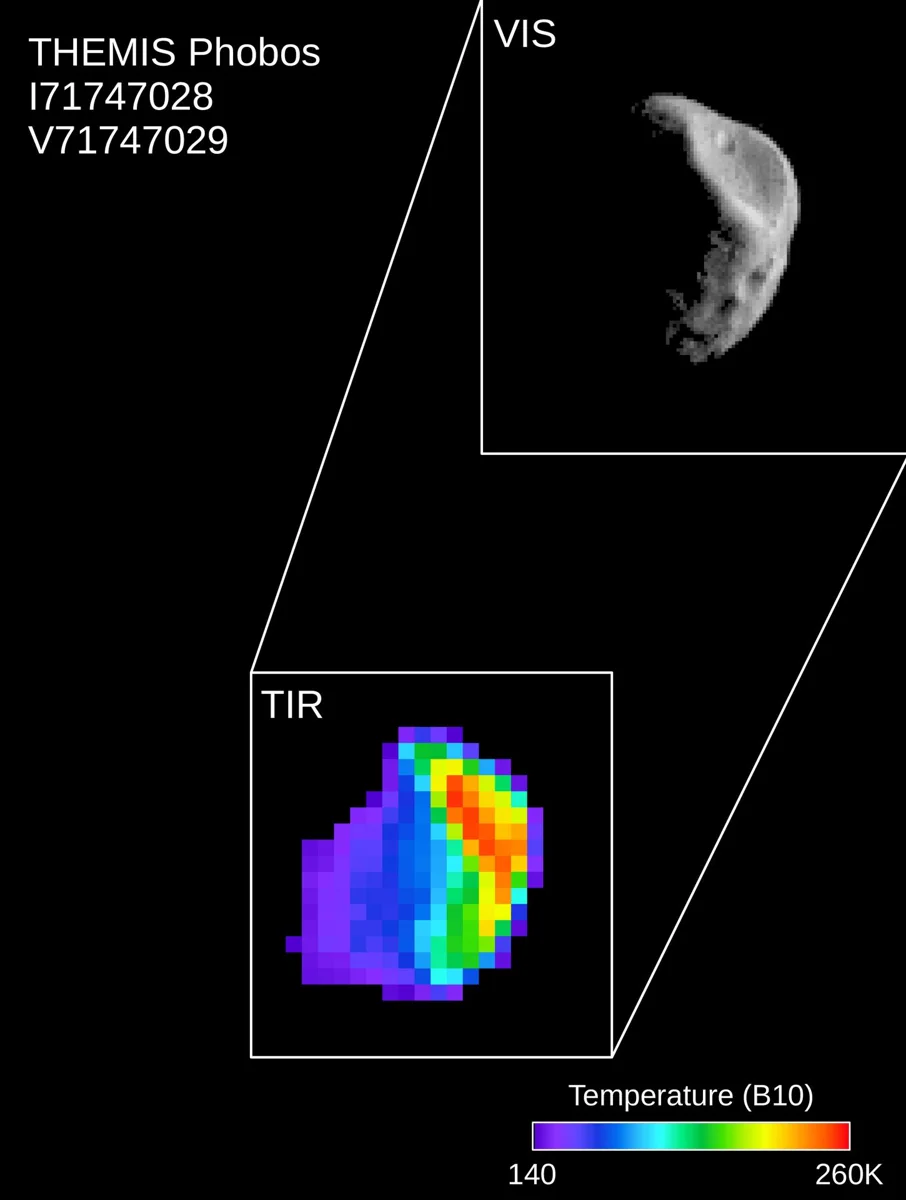
On 20 October 2026 at 04:41 JST (20 Oct 2026, 20:41 BST / 21:41 CEST) the Japanese space agency JAXA will fire an H3 launch vehicle from Tanegashima Space Center, sending the Martian Moons eXploration (MMX) spacecraft toward the Red Planet. The mission marks the first time a spacecraft will collect material from a body other than Earth’s Moon and bring it back to Earth, targeting the larger of Mars’s two moons, Phobos.
Why Phobos and Deimos matter
Mars’s tiny companions, Phobos and Deimos, have puzzled scientists since their discovery. Their origins are still debated: they could be captured asteroids or debris from a colossal impact on Mars that later coalesced into moons. Neither moon has hosted a long‑duration spacecraft, so our knowledge rests on brief fly‑bys. By retrieving actual rock and dust, MMX hopes to answer whether these moons are remnants of the early Solar System or products of Martian geology, a question that also informs theories about how Earth and other rocky planets formed.
Mission architecture and key hardware
MMX will travel roughly a year to reach Mars, entering orbit in August 2027 and moving into a quasi‑satellite orbit around Phobos by September 2027. The spacecraft carries eleven scientific instruments: seven on the main bus, four on a small rover, plus a radiation monitor and two high‑resolution cameras. The rover, named Idefix, weighs about 25 kg in space but, because Phobos’s surface gravity is only ~0.005 m s⁻², it will feel like a 15‑gram object when it walks on the moon. Idefix’s tasks are two‑fold: scout a safe landing site for the main spacecraft and analyse the texture and composition of the surface.
After a period of remote sensing, the main spacecraft will descend to Phobos in 2030, collect at least ten grams of regolith, and seal it in a return capsule. The capsule is slated to splash down in Australia in 2031, after which the samples will be shipped to Japan for cataloguing and distribution to international partners, including European scientists via ESA, CNES, DLR and JAXA.
International collaboration and future implications
MMX is a joint effort led by JAXA with contributions from NASA, ESA, CNES, and DLR. ESA’s long‑running Mars Express orbiter, expected to operate through 2029, may provide complementary observations, while the upcoming ExoMars Rosalind Franklin rover will be sampling the Martian subsurface. The synergy between these missions could create a richer picture of Mars and its moons.
The mission also serves as a technology demonstrator for future sample‑return endeavors, including potential robotic retrievals from Mars itself and, eventually, crewed missions. As ESA’s MMX Project Scientist Elliot Sefton‑Nash notes, “The data and samples returned by MMX are a window to study the evolution of Mars and the Solar System.” Bringing material back to Earth allows the use of large, ultra‑precise laboratory instruments that cannot be flown, extending the scientific return for decades.
Looking ahead: from Phobos to the stars
The MMX timeline continues beyond sample return. After delivering the Phobos capsule, the spacecraft will fly past Deimos for additional observations before heading home. The mission’s success could pave the way for more ambitious ventures, such as establishing a logistics hub in Martian orbit or using Phobos as a staging point for deeper exploration. For the Mushroom 2 Mars community, each step toward understanding Mars’s moons brings us closer to the ultimate goal of sustainable mushroom cultivation on the Red Planet – a future where even the smallest celestial bodies help feed humanity.
Sources
This article was prepared with AI assistance from the sources listed above and approved by the Mushroom 2 Mars team before publication.