Part of the guide: Mushrooms: A Complete Guide to Identification, Cooking, and Cultivation
A Side‑on Glimpse at an Intermediate Spiral
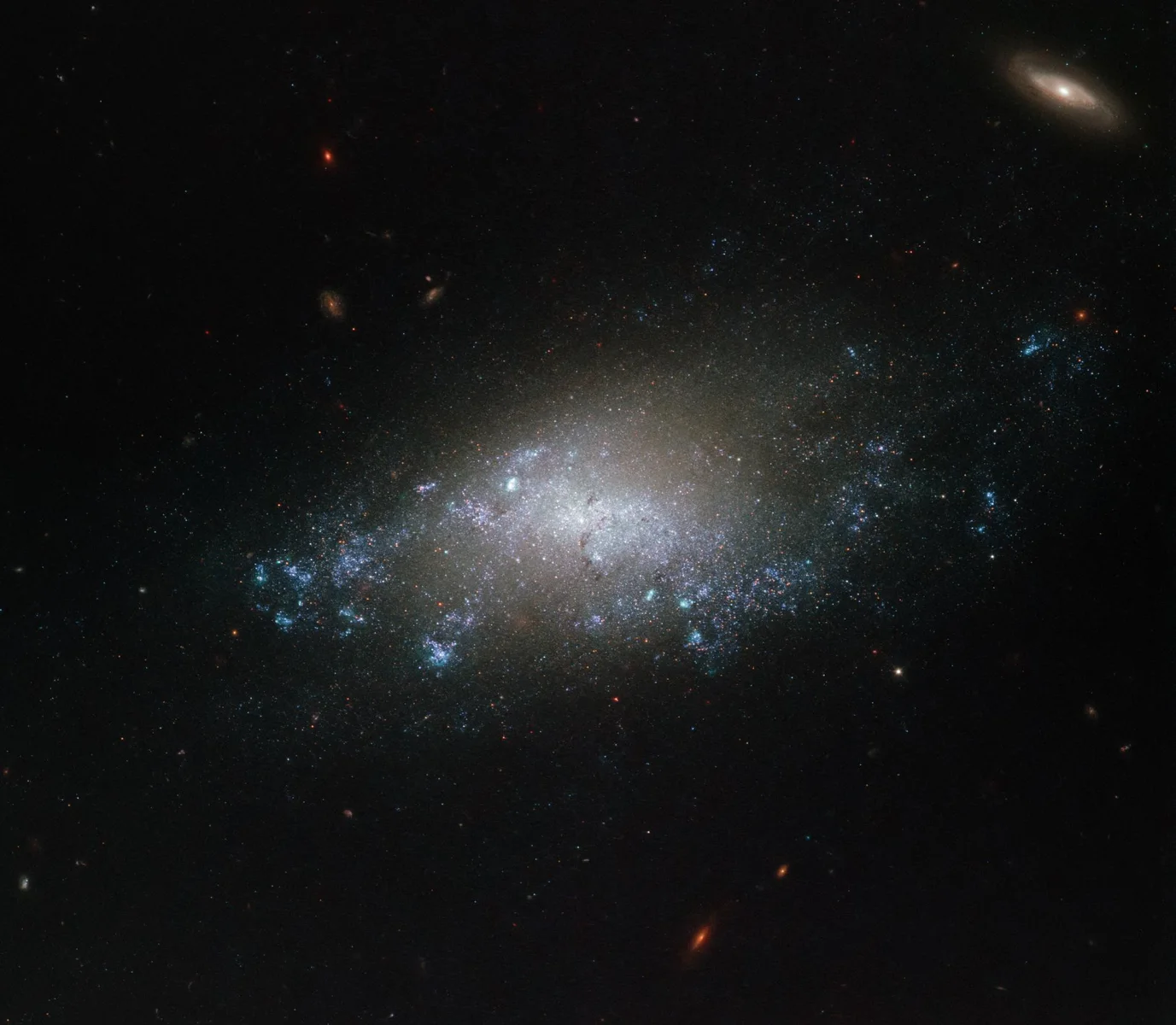
The Hubble Space Telescope’s Advanced Camera for Surveys captured a striking side‑on view of galaxy NGC 1827, located roughly 37 million light‑years away. From this angle the galaxy’s spiral arms are hidden, leaving only a luminous rim of stars and dark, brown dust ribbons that appear to sparkle against the black of space.
What Makes NGC 1827 “Intermediate”?
Spiral galaxies fall into two classic families: barred, with a straight bar of stars crossing the core, and unbarred, which lack that feature. NGC 1827 sits between these categories, earning the label intermediate spiral. Its central region shows hints of a faint bar, but the overall shape is more rounded, illustrating the continuum of galactic structures that astronomers observe.
The Twinkling Edge and Its Bright Star
The edge of the galaxy is peppered with bright blue stars that trace the outer disk. One star dominates the scene, its light split into four diffraction spikes – a visual artifact of Hubble’s optics that highlights the telescope’s incredible resolution. These spikes are not astrophysical; they result from light bending within the camera’s instrument.
Why Satellite Galaxies Matter
This image is part of a larger Hubble survey targeting 260 satellite galaxies—small systems gravitationally bound to larger hosts like the Milky Way. To date, Hubble has identified 111 satellites in the sample, and NGC 1827 is among the low‑mass members. Studying such companions helps researchers map the gravitational interplay between satellites and their hosts, shedding light on galaxy formation and the distribution of dark matter.
Connecting Cosmic Dust to Earthly Fungi
The brown dust lanes that weave through NGC 1827’s edge are rich in carbon‑based molecules, the raw ingredients for future star formation. On Earth, carbon‑rich environments also nurture fungal growth, reminding us that the same chemistry that builds galaxies also supports mushroom life. As we imagine sending cultivated mushrooms to Mars, the parallel between interstellar dust and fungal substrate feels especially poetic.
Looking Ahead: From Spiral Edges to Martian Soil
Every new Hubble snapshot expands our map of the nearby universe and informs models of how matter clusters on large scales. Those models, in turn, guide the design of closed‑loop life‑support systems for future Mars habitats—systems that could include mushroom farms thriving on recycled organic material, just as stars are born from recycled cosmic dust.
This article was prepared with AI assistance from the sources listed above and approved by the Mushroom 2 Mars team before publication.