Part of the guide: Mushrooms: A Complete Guide to Identification, Cooking, and Cultivation
Appearance and Key Features
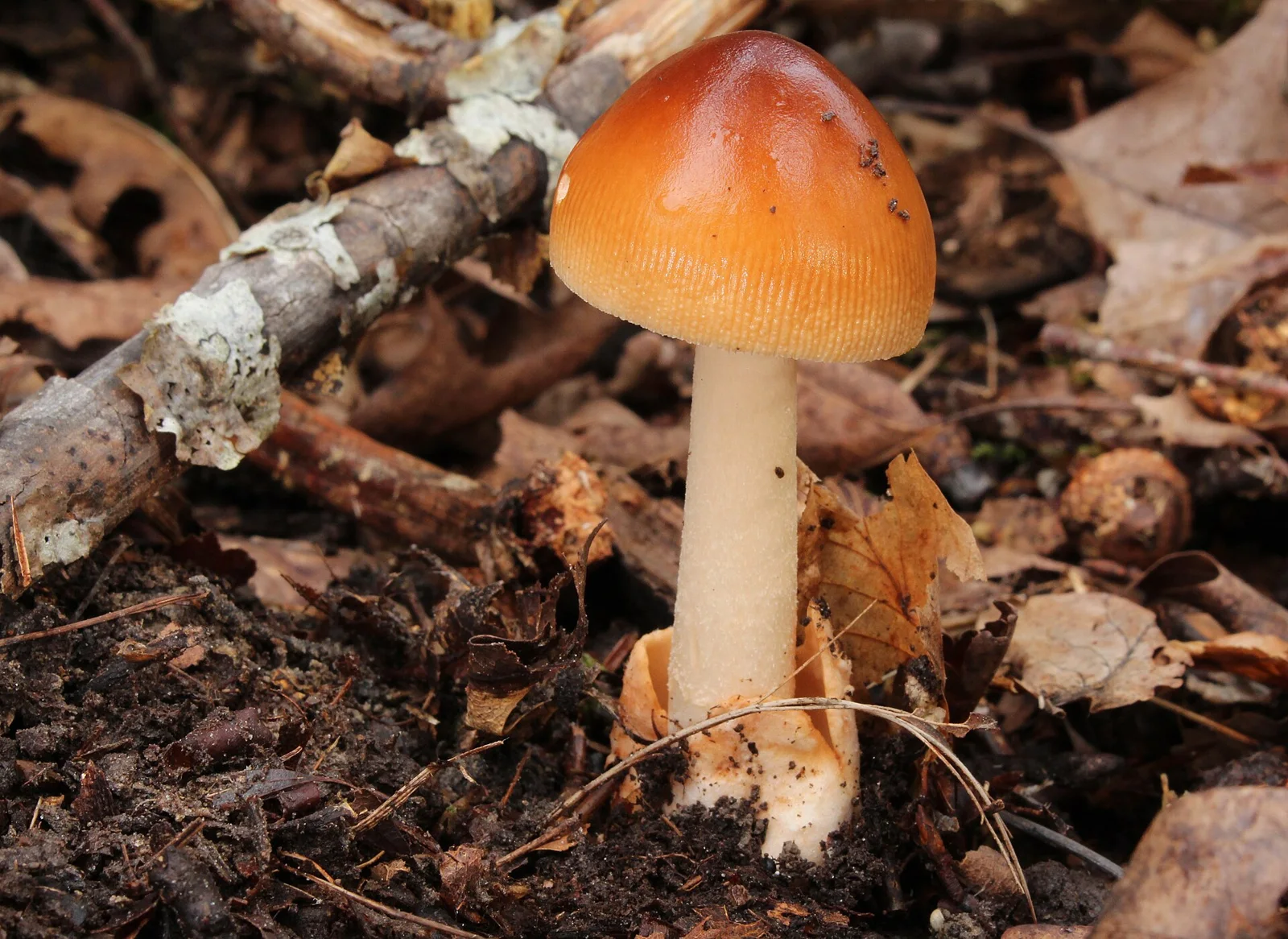
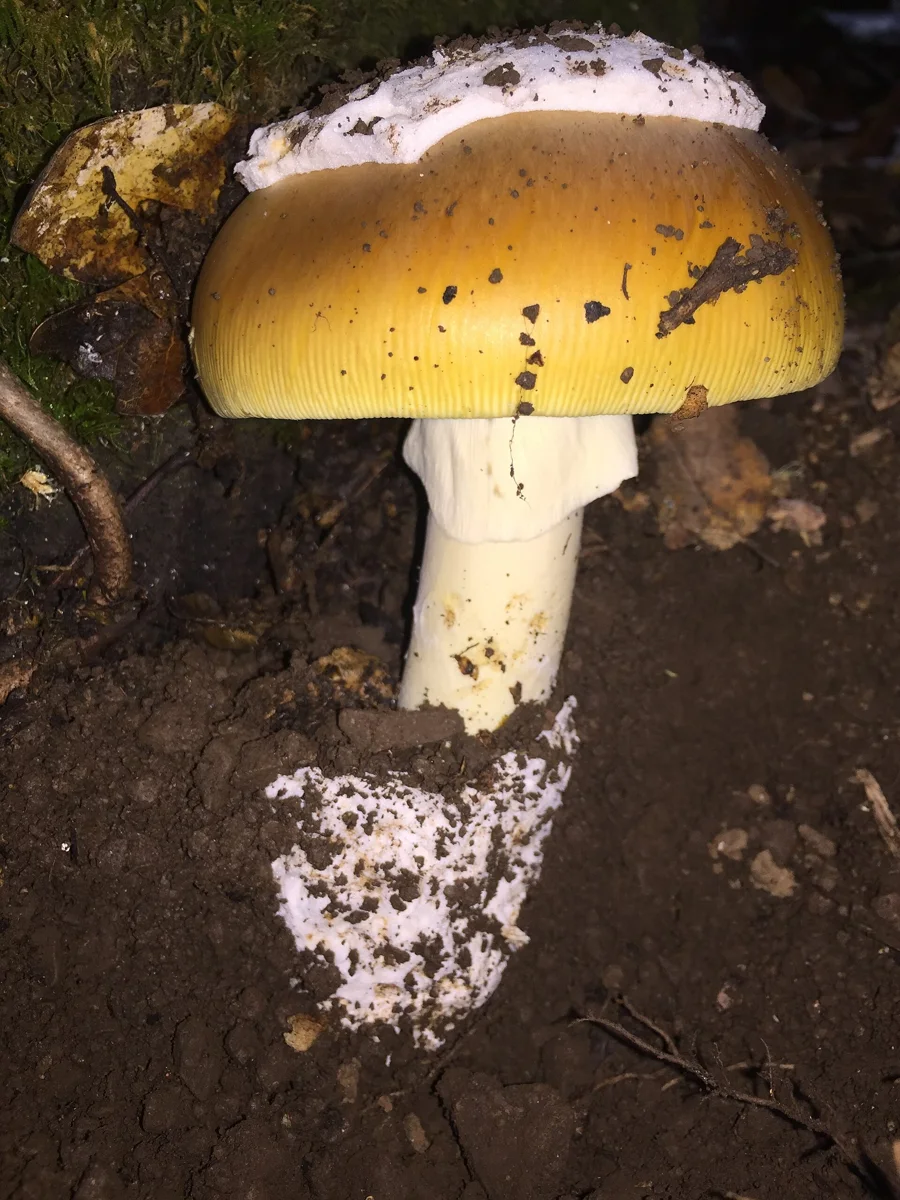
Amanita crocea, commonly called the saffron ringless amanita, sports a bright yellow‑orange cap that can reach 5–10 cm across. The centre often shows a subtle apricot hue, while the margin stays a cleaner orange. Unlike many amanitas, the cap lacks a universal veil ring, and the mushroom’s volva— a thick, white sack‑like structure at the base— is saffron‑orange near the centre and fades toward the edges.
The gills are free from the stem, cream‑colored with occasional pinkish reflections, and measure about 2–3 mm in width. The stipe stands 10–15 cm tall, tapering toward the base, and displays faint, flame‑like fibrils that may turn orange‑brown as the mushroom ages. Under a microscope the spores appear roughly 9–12 µm long and 8–11 µm wide, typical of many Amanita species.
Habitat and Seasonality
A. crocea forms mycorrhizal partnerships primarily with hardwoods such as birch and beech. It tends to appear in forest clearings where these trees dominate, usually from July through October. Though most records come from Europe, occasional reports exist from Iran, suggesting a broader but still patchy distribution. The mushroom emits a sweet, nutty scent that can help experienced foragers confirm its identity in the field.
Look‑Alikes and Safety Concerns
The most common confusions involve two other orange‑capped amanitas. Amanita fulva (the tawny grisette) shares a similar ringless habit and grows in comparable woods, yet its flesh is generally more fragile and its stem often hollow. Amanita caesarea (Caesar’s mushroom) is prized in some cuisines, but it features a distinctly orange cap with yellow gills and a robust, solid stem. Both relatives belong to different sections of the Amanita genus—Vaginatae for A. fulva and Caesareae for A. caesarea—yet their overlapping colors can mislead even seasoned collectors.
Because many deadly amanitas, such as the infamous death cap (Amanita phalloides), possess similar coloration and lack a ring, experts advise against eating A. crocea. Guides consistently warn that the risk of mistaking it for a toxic counterpart outweighs any culinary benefit. The safest practice is to admire the mushroom in its natural setting and leave it untouched.
Role in Mycological Research
Despite its limited culinary appeal, A. crocea contributes valuable data to fungal ecology. Its mycorrhizal relationship with birch and beech helps scientists track forest health and nutrient cycles. By analyzing spore morphology and DNA sequences, researchers can refine the taxonomy of the Amanita genus, clarifying evolutionary links between edible, neutral, and poisonous species. Such work also informs conservation strategies for forest habitats where these symbiotic networks thrive.
Cultural and Historical Notes
The striking saffron hue of A. crocea has inspired occasional mentions in European folklore, where bright‑colored mushrooms were sometimes linked to fairy circles or forest spirits. While not as celebrated as its cousin A. caesarea—historically prized by Roman chefs—the saffron ringless amanita still appears in older field guides as a “cautionary” species, reminding foragers of the fine line between edible and lethal in the Amanita family.
Practical Guidance for Foragers
If you encounter a mushroom that matches the description above, follow these steps: 1. Confirm the habitat – Look for birch or beech trees and note the time of year (mid‑summer to early autumn).\ 2. Examine the volva – A thick, sack‑like base that is orange‑tinged near the centre is characteristic.\ 3. Check the cap – Absence of a ring and a bright yellow‑orange surface are key identifiers.\ 4. Avoid consumption – Even if the mushroom seems edible, the similarity to poisonous species makes it unsafe to eat.\ 5. Document – Take clear photos of the cap, gills, stipe, and volva for future reference or expert verification.
By treating A. crocea as a subject of observation rather than a food source, you help maintain safety while contributing to citizen‑science databases that map fungal diversity.
While we keep our feet firmly on Earth, the study of hardy, symbiotic fungi like Amanita crocea fuels imagination about growing resilient crops on other worlds—perhaps even on the red planet someday.
Sources
This guide is not a foraging or identification manual. Many edible mushrooms have toxic look-alikes. Never eat a wild mushroom unless an expert has identified it in person.
This article was prepared with AI assistance from the sources listed above and approved by the Mushroom 2 Mars team before publication.