Part of the guide: Mushrooms: A Complete Guide to Identification, Cooking, and Cultivation
Why Apple Pomace Works for Shiitake
Apple pomace – the fibrous pulp left after juicing or cider production – is rich in cellulose, hemicellulose, and residual sugars. Shiitake (Lentinula edodes) naturally breaks down hardwood lignocellulose, so a supplement of apple fibers can boost mycelial growth while reducing waste. Studies on agricultural residues show that adding 10‑20 % fruit pomace to hardwood sawdust improves colonization speed without compromising fruit body quality (see research from the University of Minnesota’s Department of Food Science).
Collecting and Preparing the Pomace
- Source fresh pomace – Obtain it from a local cider mill, juice bar, or home‑made pressing within 24 hours of production. Fresh material retains moisture and nutrients; older pomace may develop unwanted microbes.
- Dry the pomace – Spread the pulp on a clean tray and dry in a low‑temperature oven (45‑55 °C) for 2‑3 hours, or air‑dry in a shaded area until it feels crumbly. Drying reduces the risk of contamination and makes the material easier to blend.
- Grind to a fine consistency – Use a kitchen processor or mortar to break the dried pomace into particles roughly the size of sawdust (2‑4 mm). Uniform size ensures even moisture distribution when mixed with the main substrate.
Formulating the Substrate Mix
A reliable shiitake substrate typically consists of hardwood sawdust, bran, and a moisture‑retaining agent. For a small‑scale batch (about 10 kg dry weight), try the following ratio: - 7 kg hardwood sawdust (oak or beech works best) - 2 kg dried apple pomace - 0.5 kg wheat bran (provides extra nitrogen) - 0.5 kg gypsum (calcium source that improves texture)
Adjusting Moisture
Add clean, filtered water until the mixture reaches 60‑65 % moisture. A simple test is the “squeeze test”: grab a handful and squeeze – a few drops should emerge, but the material should not drip.
Sterilizing the Substrate
- Bag it – Pack the substrate into autoclavable polypropylene bags (5‑10 µm filter patch on the top for gas exchange). Fill each bag to about 80 % of its volume to leave room for expansion.
- Sterilize – Place bags in a pressure cooker or autoclave at 121 °C for 90 minutes. If a pressure cooker isn’t available, a large pot with a tight‑fitting lid can be used for a 2‑hour steam pasteurization, though sterilization yields more consistent results.
- Cool – Allow bags to return to room temperature (below 30 °C) before inoculation to avoid killing the shiitake spawn.
Inoculating with Shiitake Spawn
- Choose spawn type – Grain spawn (e.g., rye or millet) is common for home growers. Liquid spawn can also be used but requires careful handling.
- Inoculation rate – Mix 5‑10 % (by dry weight) spawn into the cooled substrate. For a 10 kg batch, that means 0.5‑1 kg of grain spawn.
- Seal and shake – Seal the bag, then gently shake or roll it to distribute the spawn evenly throughout the substrate.
- Incubation – Store the inoculated bags in a dark, humid environment (20‑25 °C, 85‑90 % relative humidity). Within 2‑3 weeks you should see white mycelial colonization spreading throughout the bag.
Initiating Fruiting
- Shock the mycelium – Once the bag is fully colonized, cut 2‑3 small slits in the bag or remove the bag entirely and place the substrate in a fruiting chamber.
- Provide fresh air exchange – Shiitake needs a high CO₂ turnover. Aim for 4‑6 air changes per hour using a small fan with indirect airflow.
- Maintain temperature and humidity – Keep fruiting conditions at 12‑18 °C with 85‑95 % humidity. Mist the chamber lightly if the surface begins to dry.
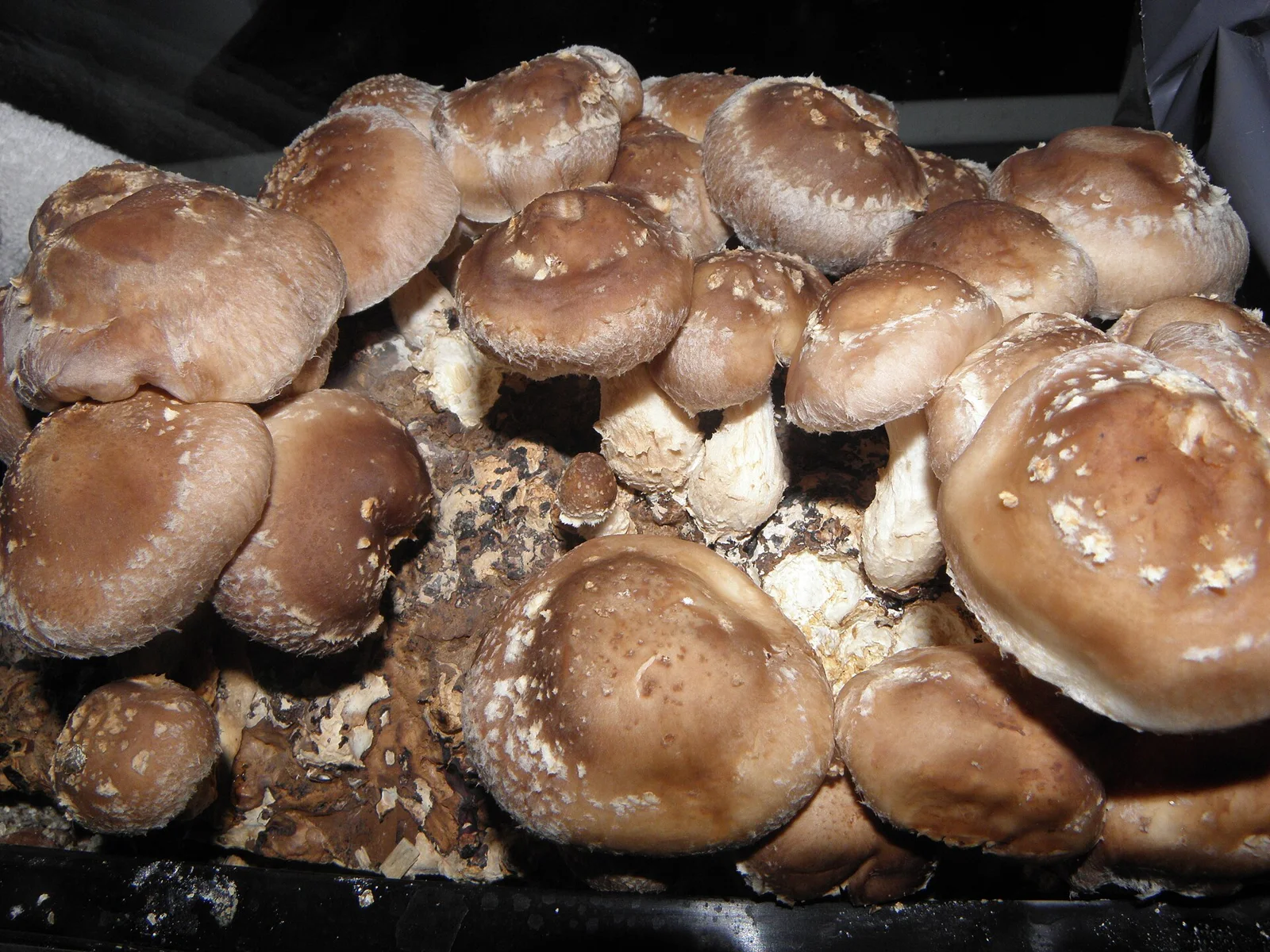
- Harvest – Shiitake caps appear after 7‑14 days. Twist gently at the base to detach the mushroom without damaging the mycelium, allowing additional flushes over the next several weeks.
Troubleshooting Common Issues
- Contamination – Green, black, or fluffy white growths indicate mold or bacterial invasion. Prevent by ensuring thorough sterilization and maintaining clean inoculation techniques.
- Slow colonization – May result from low moisture or insufficient spawn. Verify moisture content and consider increasing spawn ratio for the next batch.
- Poor fruiting – Often caused by low fresh‑air exchange or temperature that’s too high. Adjust fan speed and lower the chamber temperature.
From Apple Waste to Martian Harvest
Repurposing apple pomace not only diverts food‑industry waste but also creates a substrate that could be adapted for closed‑loop mushroom farms on space habitats. By mastering this low‑tech method on Earth, growers gain insights for future cultivation systems that might one day feed explorers on Mars.
Sources
- Utilization of Fruit Processing By‑Products for Mushroom Cultivation
- Shiitake (Lentinula edodes) Substrate Formulation and Yield
This article was prepared with AI assistance from the sources listed above and approved by the Mushroom 2 Mars team before publication.