Part of the guide: Mushrooms: A Complete Guide to Identification, Cooking, and Cultivation
A Bright Introduction to the Royal Bolete
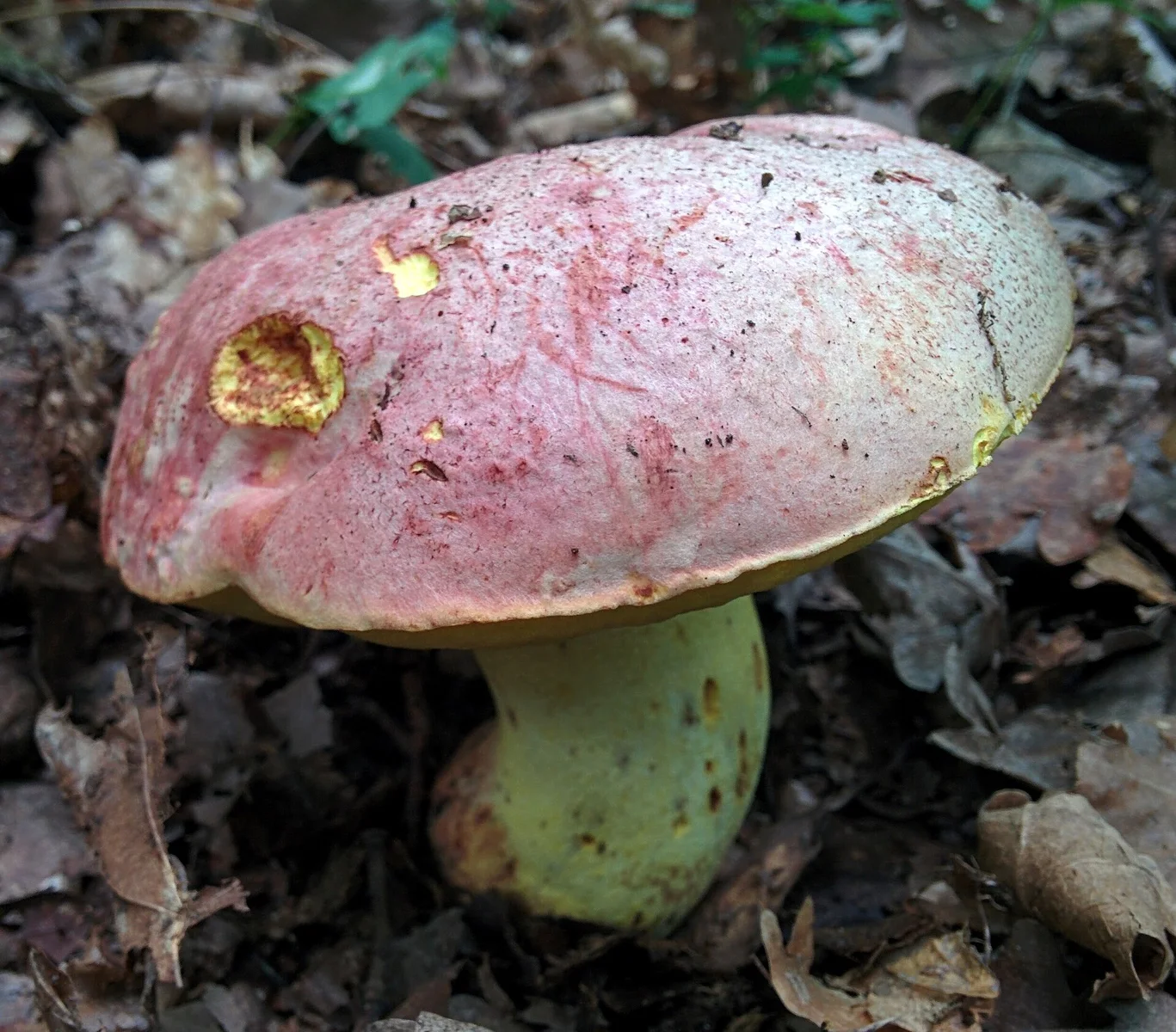
Butyriboletus regius, often called the royal bolete or red‑capped butter bolete, is a striking member of the bolete family. Its pink‑to‑red cap, bright yellow flesh, and finely reticulated stem make it a favorite of foragers and chefs alike. While it appears across North America, Europe, and parts of China, subtle regional differences—like the tendency of North American specimens to turn blue when bruised—help experts tell the mushroom apart from look‑alikes.
Taxonomic Journey: From Boletus to Butyriboletus
First described by Julius Vincenz von Krombholz in 1832, the species was long placed in the genus Boletus. Molecular studies later showed that the “butter bolete” group forms a distinct lineage, prompting the creation of the new genus Butyriboletus. This reclassification reflects modern DNA‑based approaches that refine our understanding of fungal relationships, separating B. regius from relatives such as Boletus appendiculatus.
Field Identification: What to Look For
- Cap: Convex to flat, 6–20 cm wide, pink‑red sometimes tinged with yellow or brown. Young caps feel velvety; older caps develop wrinkles and pits.
- Flesh: Yellow, bruising blue in many North American finds, but often remaining unchanged in European specimens.
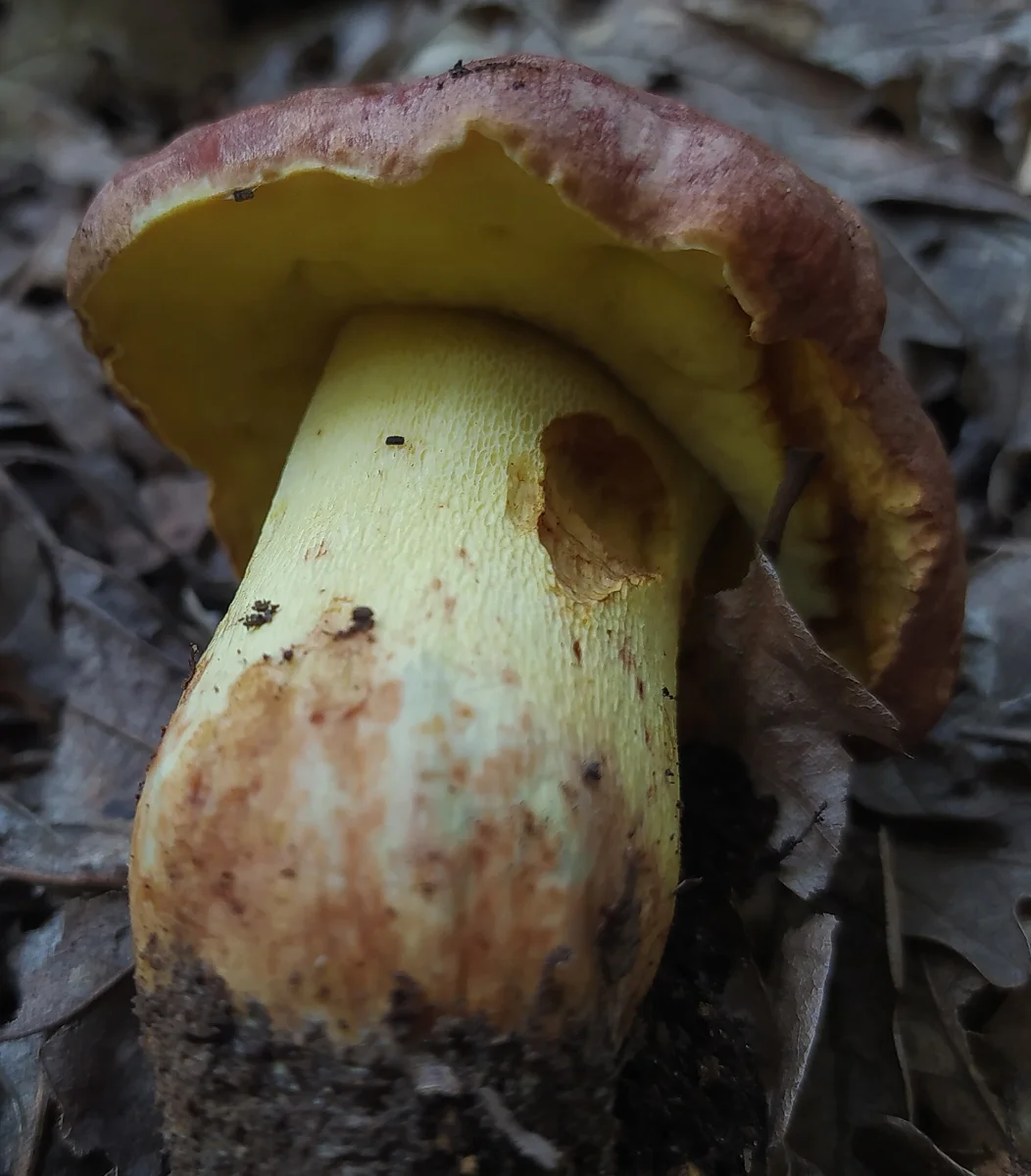
- Pores: Small, angular (1–2 per mm), bright yellow initially, darkening with age and also staining blue when damaged.
- Stem: 5–14 cm long, 2.5–6 cm thick, solid, bright yellow with possible reddish tones at the base. Fine yellow reticulation may cover the whole stem or just the upper part.
- Spore Print: Olive‑brown, with smooth, ellipsoidal spores measuring 12–17 µm × 4–5 µm.
- Chemical Test: Applying iron sulfate (FeSO₄) to the cap cuticle yields a pale purple hue; the flesh turns grayish.
These traits, especially the combination of a pink cap and yellow reticulate stem, are useful for distinguishing the royal bolete from other boletes that may have similar colors but lack the characteristic stem pattern.
Habitat, Season, and Conservation
Butyriboletus regius forms ectomycorrhizal partnerships with a range of trees, especially oak and fir. In the Pacific Northwest of the United States (California, Oregon, Washington), fruit bodies appear from August to November, with occasional spring sightings in May–June. European populations are far scarcer; the mushroom appears on several regional Red Lists and is considered endangered in the Czech Republic. Its rarity underscores the importance of sustainable foraging and habitat protection.
Culinary Use: Simple, Safe Preparation
Both European and North American forms are prized as “choice” edibles, though the latter may sometimes host maggots. When cooking, treat the royal bolete like other firm boletes: 1. Cleaning: Gently brush off soil with a soft brush; avoid soaking, which can make the flesh soggy. 2. Slicing: Cut the cap and stem into bite‑size pieces. The thick stem holds up well to sautéing. 3. Cooking: Heat a skillet with a tablespoon of oil or butter over medium heat. Add the mushroom pieces and cook 5–7 minutes, stirring until they release their moisture and turn golden. 4. Seasoning: Finish with a pinch of salt, fresh herbs (such as thyme or parsley), and a splash of white wine or vegetable broth for depth. 5. Serving: The sautéed royal bolete pairs nicely with risotto, pasta, or as a topping for grilled polenta.
Because the mushroom’s flesh can bruise blue, some cooks recommend discarding heavily discolored portions, though the color change is not harmful. Always source specimens from reliable, non‑polluted sites and never consume wild‑picked mushrooms without expert confirmation.
From Earth to Mars: Why the Royal Bolete Matters
Mushroom growers on Earth are already experimenting with Butyriboletus regius for its robust mycelium and flavorful fruiting bodies. Its ability to form strong mycorrhizal links could be valuable for future closed‑loop agricultural systems on Mars, where cultivating edible fungi alongside plant roots may help recycle nutrients and provide fresh food for crews.
Explore the world of boletes responsibly, and enjoy the royal bolete’s regal flavor in your next kitchen adventure.
Sources
This guide is not a foraging or identification manual. Many edible mushrooms have toxic look-alikes. Never eat a wild mushroom unless an expert has identified it in person.
This article was prepared with AI assistance from the sources listed above and approved by the Mushroom 2 Mars team before publication.