Part of the guide: Mushrooms: A Complete Guide to Identification, Cooking, and Cultivation
Taxonomic Roots
Bondarzewia mesenterica was originally described in the 18th century under a different name. Jacob Christian Schäffer recorded it as Boletus mesentericus in 1774. More than two centuries later, German mycologist Hanns Kreisel reassigned the species to the genus Bondarzewia in 1984, giving it the name we use today. This taxonomic history reflects the evolving understanding of polypore relationships within the family Bondarzewiaceae.
A Massive, Fan‑Shaped Fruit Body
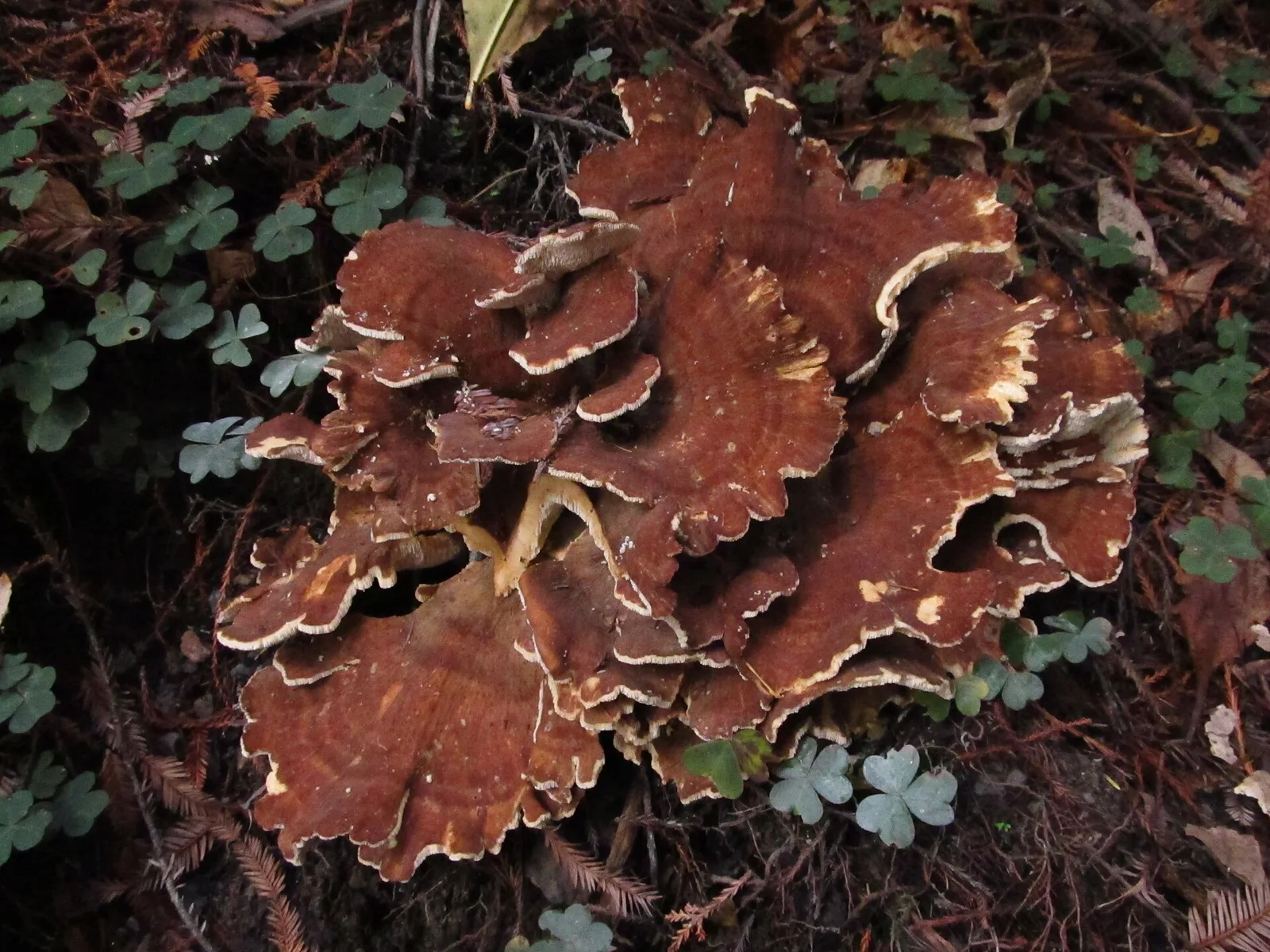
When fully mature, B. mesenterica can form a contiguous mass that stretches up to a metre across – roughly the length of a small sofa. Individual caps may reach 25 cm in width, are fan‑shaped, and often overlap one another, creating a layered appearance. The surface is tomentose, showing a brownish zonation that adds visual texture. Beneath the caps lie buff‑colored pores up to 2 mm wide, through which the fungus releases spores. The flesh inside is whitish and emits a pleasant scent when fresh, a trait that contrasts with many other polypores.
Underground Architecture: The Sclerotium
Unlike many mushrooms that develop a distinct stalk, B. mesenterica grows from an underground sclerotium – a compact, hardened mass that can be up to 12 cm long and 5 cm thick. The caps and any short stalks are continuous with this base, anchoring the fungus firmly to the soil and to the roots of nearby trees. This growth habit helps the fungus persist through seasonal changes and contributes to its large, sometimes sprawling appearance.
Habitat and Ecological Role
Bondarzewia mesenterica is most commonly found at the base of coniferous trees. It colonises the roots and lower trunks, causing a type of white rot that breaks down lignin and cellulose. While the decay can weaken trees over time, the fungus also plays a vital role in forest nutrient cycling, returning organic material to the soil and supporting a diverse micro‑ecosystem.
Edibility: Tough but Edible
The species is listed as edible, but culinary experts note two challenges. First, the texture is notably tough, requiring prolonged cooking to become palatable. Second, the flesh can develop a bitter flavor, especially in older specimens. For those interested in trying it, chefs typically slice the caps thinly, simmer them for an hour or more, and incorporate them into hearty stews or broth‑based dishes where the bitterness can be balanced with aromatic vegetables and herbs. As always, only consume mushrooms that have been positively identified by an expert; wild foraging should never rely on self‑identification alone.
Similar Species: A Quick Comparison
Outside its own genus, B. mesenterica bears a superficial resemblance to Meripilus giganteus, another large, fan‑shaped polypore that grows at tree bases. However, M. giganteus usually has a more pronounced, shaggy surface and different pore coloration, which can help seasoned foragers tell the two apart.
From Forest Floor to Martian Greenhouse?
While Bondarzewia mesenterica thrives in Earth’s conifer forests, its ability to decompose woody material and grow from a compact sclerotium makes it an interesting candidate for experimental fungal cultivation in closed‑loop life‑support systems—an area of research that could one day support sustainable food production on Mars.
Sources
This guide is not a foraging or identification manual. Many edible mushrooms have toxic look-alikes. Never eat a wild mushroom unless an expert has identified it in person.
This article was prepared with AI assistance from the sources listed above and approved by the Mushroom 2 Mars team before publication.