Part of the guide: Mushrooms: A Complete Guide to Identification, Cooking, and Cultivation
A Hidden Giant Beneath the Forest Floor
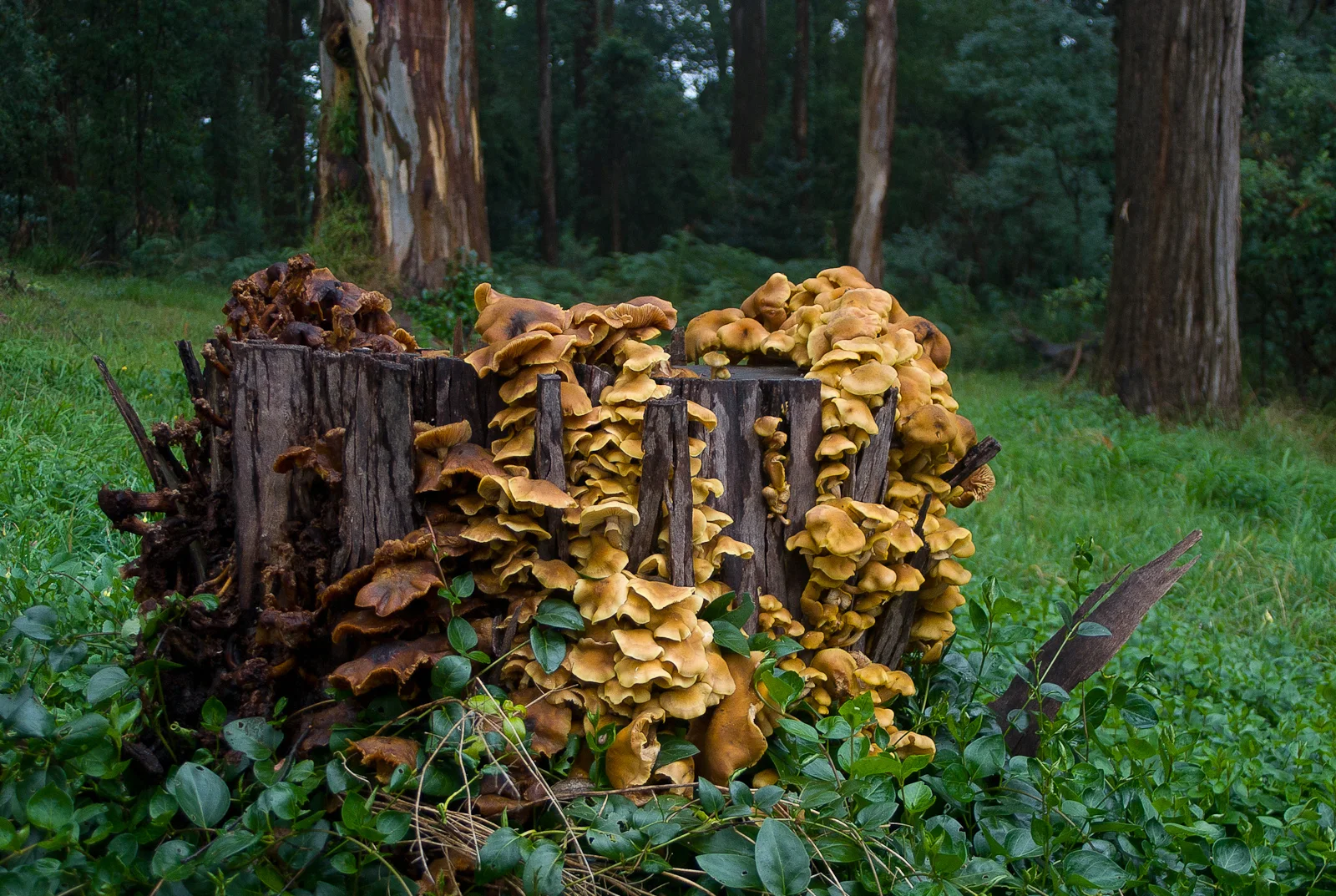
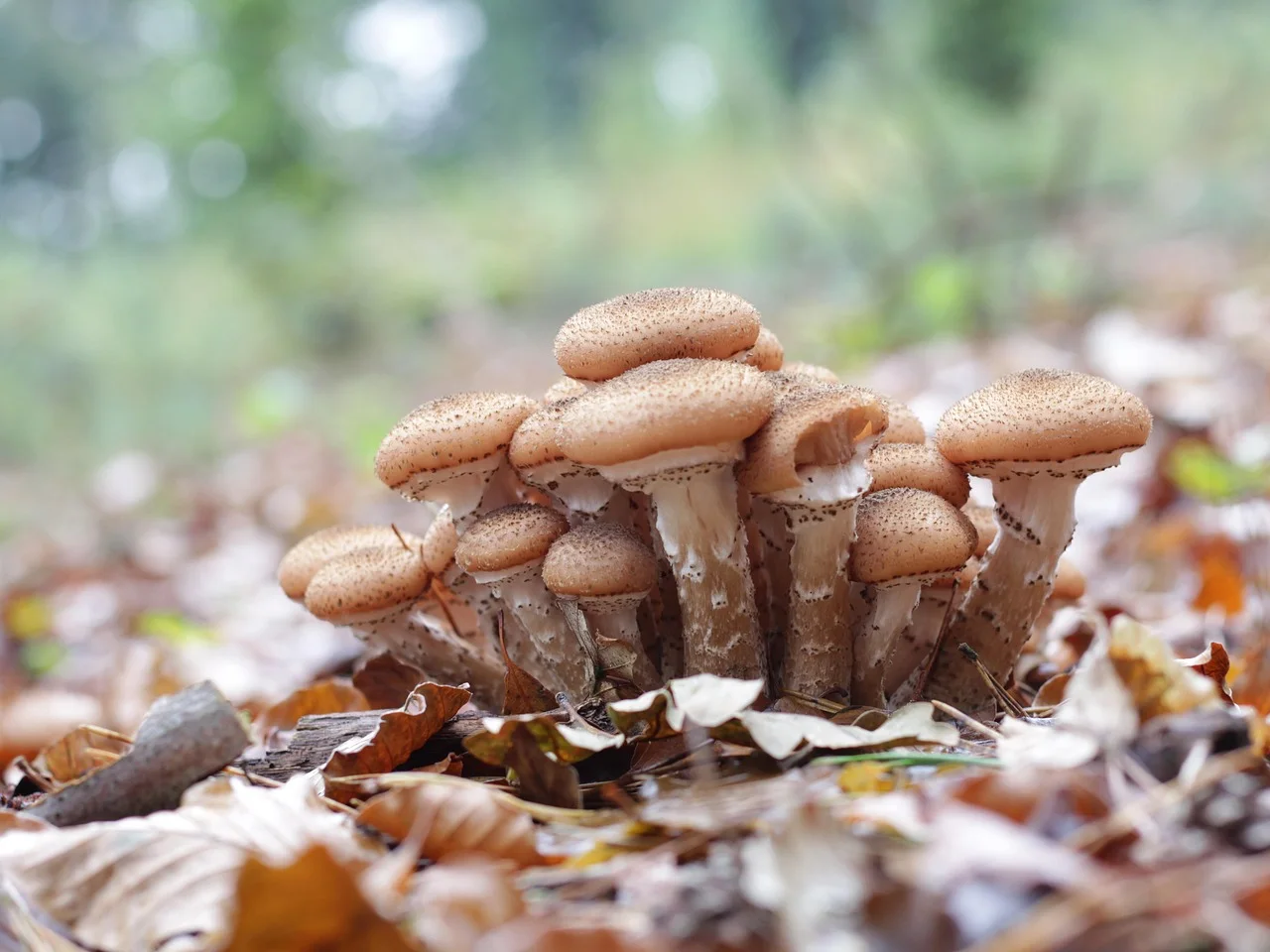
Armillaria ostoyae, often called the honey mushroom, spends most of its life hidden underground. Its mycelium spreads through the sapwood of trees and can travel long distances as black, shoe‑lace‑like cords called rhizomorphs. When conditions are right in autumn, the organism sends up fruiting bodies that look like typical mushrooms, but the bulk of the organism remains unseen beneath the bark and soil. This hidden growth habit allows it to cover vast areas – in some cases thousands of acres – making it one of the largest known living organisms on Earth.
Distinctive Features for Identification
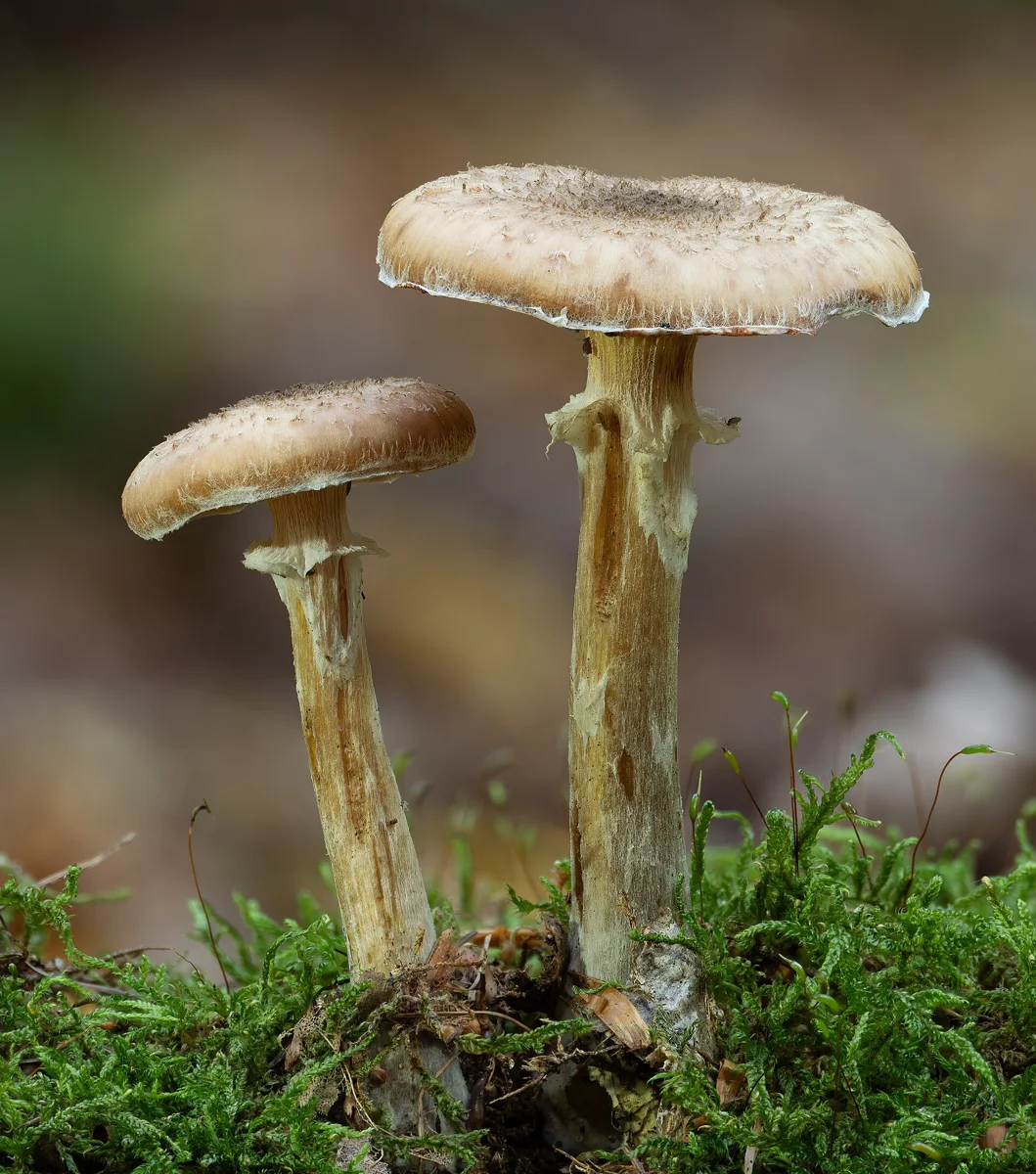
Although the underground network is invisible, the mushrooms that appear above ground give clues to the species. The caps are usually cream‑brown with prominent scales, and the gills run down the stem (decurrent lamellae). A well‑developed, membranous ring (annulus) encircles the stipe, and the spore print is white. These traits help separate A. ostoyae from look‑alikes such as Pholiota limonella, which lacks the characteristic rhizomorph fans that often accompany the honey mushroom.
How It Spreads: Spores and Rhizomorphs
Like most fungi, A. ostoyae reproduces sexually via spores. Each spore carries one of two mating types; successful fusion of complementary types initiates a new mycelial colony. While wind can carry spores far afield, the fungus’s true power lies in its rhizomorphs. These black, cord‑like structures act like underground highways, delivering water and nutrients across meters of forest floor and allowing the organism to colonize new hosts without relying on spore dispersal alone.
The World’s Largest Organisms
Genetic studies have shown that a single individual of A. ostoyae in northern Michigan occupies about 91 acres and weighs roughly 440 tons – comparable to three blue whales. Even more impressive is the Oregon specimen in Malheur National Forest, which spans 3.5 square miles (about 9 km²) and may weigh up to 35,000 tons. Estimated to be several thousand years old, this “humongous fungus” rivals the massive aspen clone Pando and the seagrass meadow Posidonia australis for the title of largest living organism by area and biomass.
Ecological Role and Pathogenic Impact
Armillaria ostoyae is a pathogen of both hardwood and conifer trees. By invading sapwood, the fungus can weaken or kill its hosts, leading to what foresters call “Armillaria root disease.” In the Pacific Northwest, the disease is a significant concern for timber production, especially in interior cedar‑hemlock zones where the fungus thrives. While the organism can cause tree mortality, it also contributes to forest turnover by breaking down dead wood, recycling nutrients back into the ecosystem.
A Glimpse of Bioluminescence
One of the more enchanting traits of A. ostoyae is its occasional bioluminescence. The mycelial cords can emit a faint, greenish glow known as “foxfire,” a phenomenon documented in several forested regions. Although the light is subtle, it highlights the complex chemistry of fungal metabolism and adds a magical quality to the night‑time forest floor.
From Earth to Mars: Lessons for Space Farming
The extraordinary size and resilience of Armillaria ostoyae illustrate how a single organism can dominate a landscape through efficient underground networking. Understanding these natural strategies may inspire future designs for fungal bioreactors or substrate‑based life‑support systems in off‑world habitats, such as the mushroom farms envisioned for Mars colonies.
Sources
This guide is not a foraging or identification manual. Many edible mushrooms have toxic look-alikes. Never eat a wild mushroom unless an expert has identified it in person.
This article was prepared with AI assistance from the sources listed above and approved by the Mushroom 2 Mars team before publication.