A Vivid Cap and Distinctive Shape
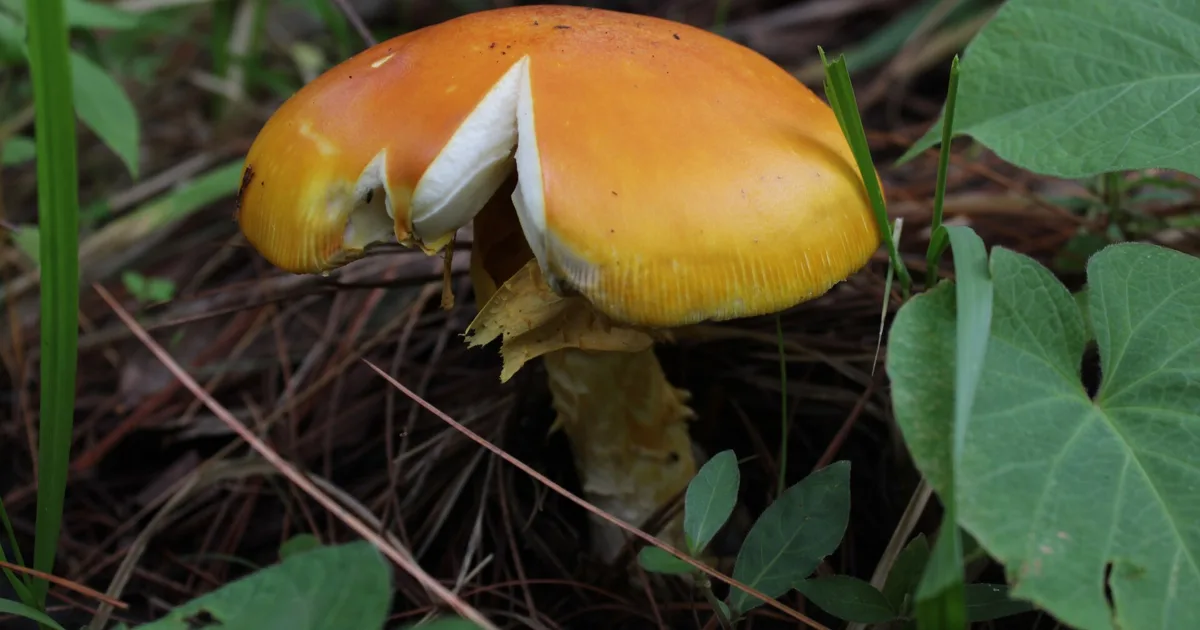
Amanita basii is a striking member of the Amanitaceae family, easily recognized by its bright, multicolored cap. The cap ranges from about 6.7 cm to 15.2 cm across and shifts from a reddish‑brown base to intense reds and orange‑yellows toward the edge. Sun‑faded spots may appear orange‑yellow to deep orange, while the margin can turn yellow as the mushroom matures. Underneath, the flesh is a buttery yellow near the skin, fading to pale white elsewhere, and measures roughly 9–13 mm thick before thinning toward the edge.
Gills, Stem, and Volva Details
The gills of A. basii are free from the stem, sub‑crowded, and broaden toward the cap margin, typically 9–12 mm wide. The stem is relatively tall—about 12.4–13.7 cm long and 1.6–2.3 cm thick—and displays a gradient from pale yellow‑orange near the top to a light yellow lower down. When handled, the upper stem can darken to brown‑black tones. A prominent, skirt‑like ring sits sub‑apically (just below the cap), starting orange‑yellow and shifting to yellow‑orange with age. The mushroom’s volva is a smooth, white, sack‑like structure attached firmly to the stem, often showing faint yellow on its interior surface.
Microscopic Features
Spore measurements for A. basii fall between 9.0–11.8 µm in length and 6.1–7.5 µm in width, though a broader range (8.0–18.0 × 5.5–9.0 µm) is reported. The spores are broadly ellipsoid to elongate and are inamyloid, meaning they do not stain with iodine solutions. Clamp connections are common at the bases of the basidia, a useful trait for microscopic identification.
Habitat and Geographic Range
Amanita basii is native to pine forests of Mexico, where it forms mycorrhizal relationships with conifer roots. Its presence is most commonly recorded in mountainous regions that support pine stands, thriving in the acidic, well‑drained soils typical of these forests.
Edibility and Culinary Use
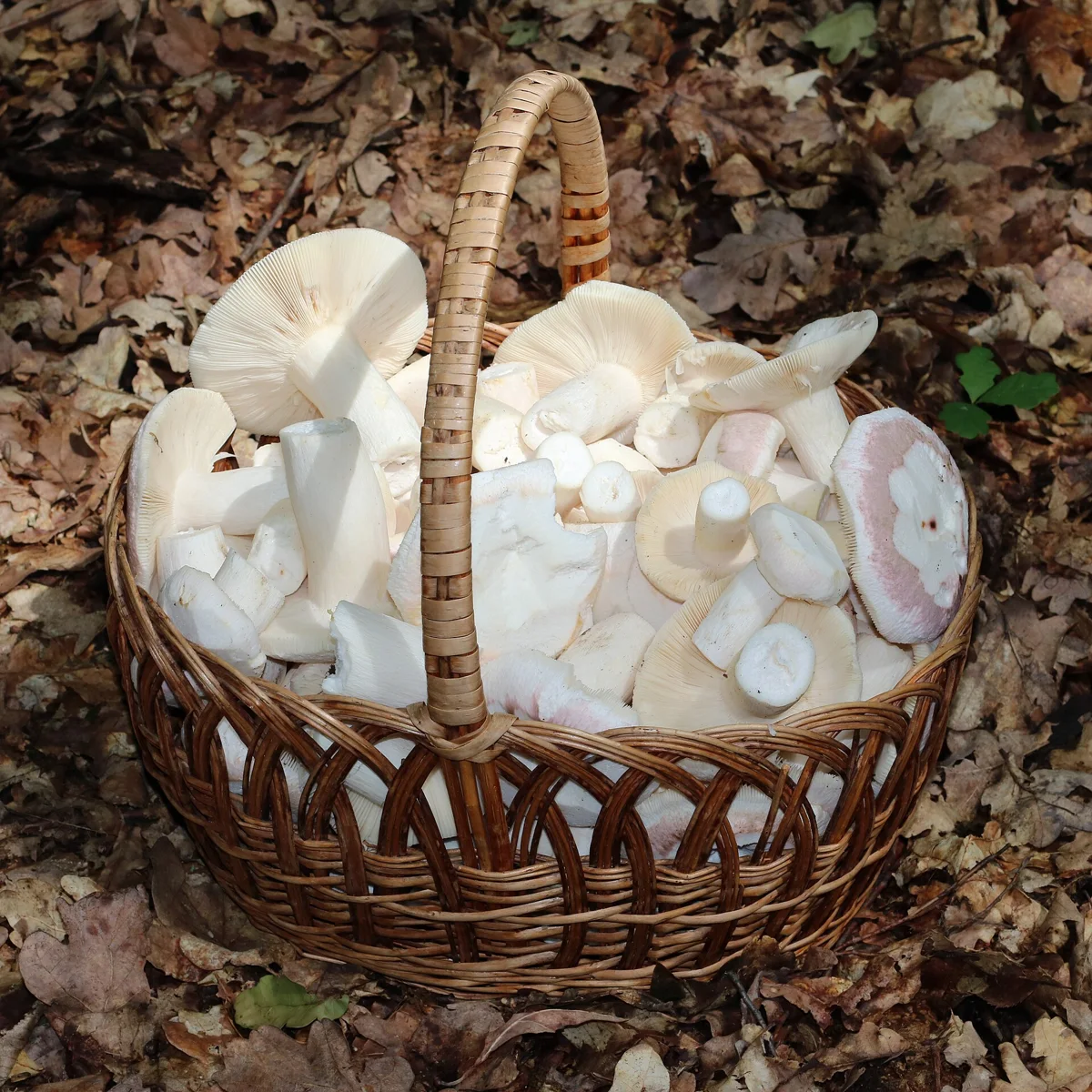
Although not as famous as some other edible Amanitas, A. basii is regarded as edible and is noted for a sweet, pleasant flavor with a mild fungoid aroma. In parts of Guatemala near the Mexican border, vendors sell this mushroom in local markets alongside Russulaceae species such as Russulas and milkcaps. In Mexican cuisine, especially in regions where the corn fungus Huitlacoche is popular, A. basii may appear in dishes like sautéed mushrooms, soups, or as a garnish for tacos. As with any wild mushroom, proper identification is essential, and only specimens confirmed as A. basii should be consumed.
Similar Species to Watch For
Foragers should avoid confusing A. basii with look‑alikes such as Amanita laurae (often found under oaks), Amanita yema (associated with firs), or Amanita jacksonii (a cloud‑forest dweller). These relatives differ in habitat, cap coloration, and microscopic traits, so careful comparison is advised.
From Forest Floors to Martian Labs
The vivid colors and sturdy structure of Amanita basii make it an attractive candidate for study in controlled growth environments. Researchers interested in extending mushroom cultivation to extraterrestrial habitats—like the Mushroom 2 Mars project—can learn from the species’ adaptability to pine‑forest soils and its ability to develop a robust, fleshy body under varying light conditions. While A. basii itself is not currently part of any Mars‑bound experiments, its characteristics illustrate the diversity of fungi that could one day support life beyond Earth.
Imagine a future where the same bright caps that dot Mexican pine woods are cultivated in a habitat dome on the Red Planet, adding a splash of color to Martian meals.
Sources
This guide is not a foraging or identification manual. Many edible mushrooms have toxic look-alikes. Never eat a wild mushroom unless an expert has identified it in person.
This article was prepared with AI assistance from the sources listed above and approved by the Mushroom 2 Mars team before publication.