Part of the guide: Mushrooms: A Complete Guide to Identification, Cooking, and Cultivation
Seasonal rhythms in fungal metabolism
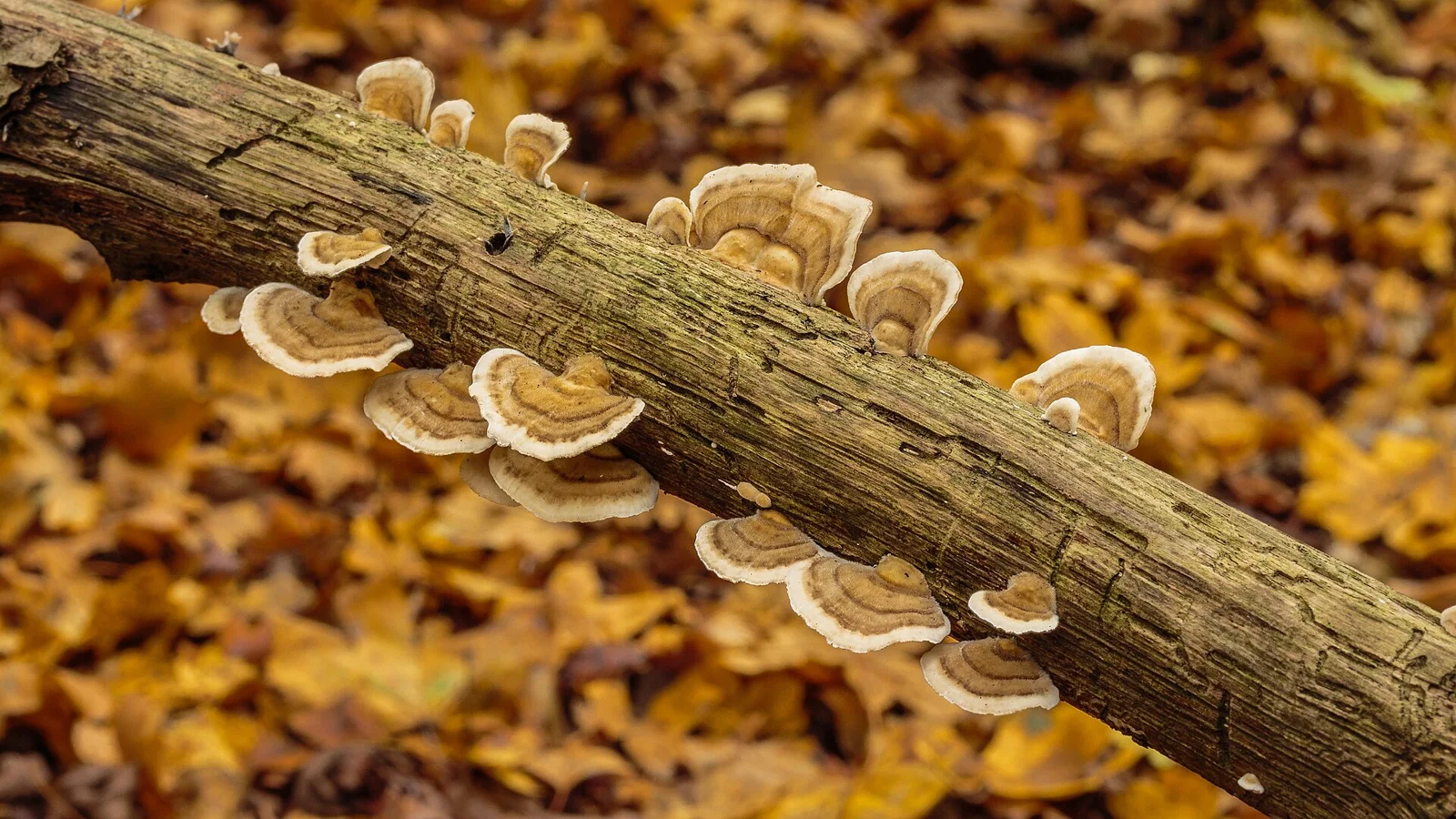
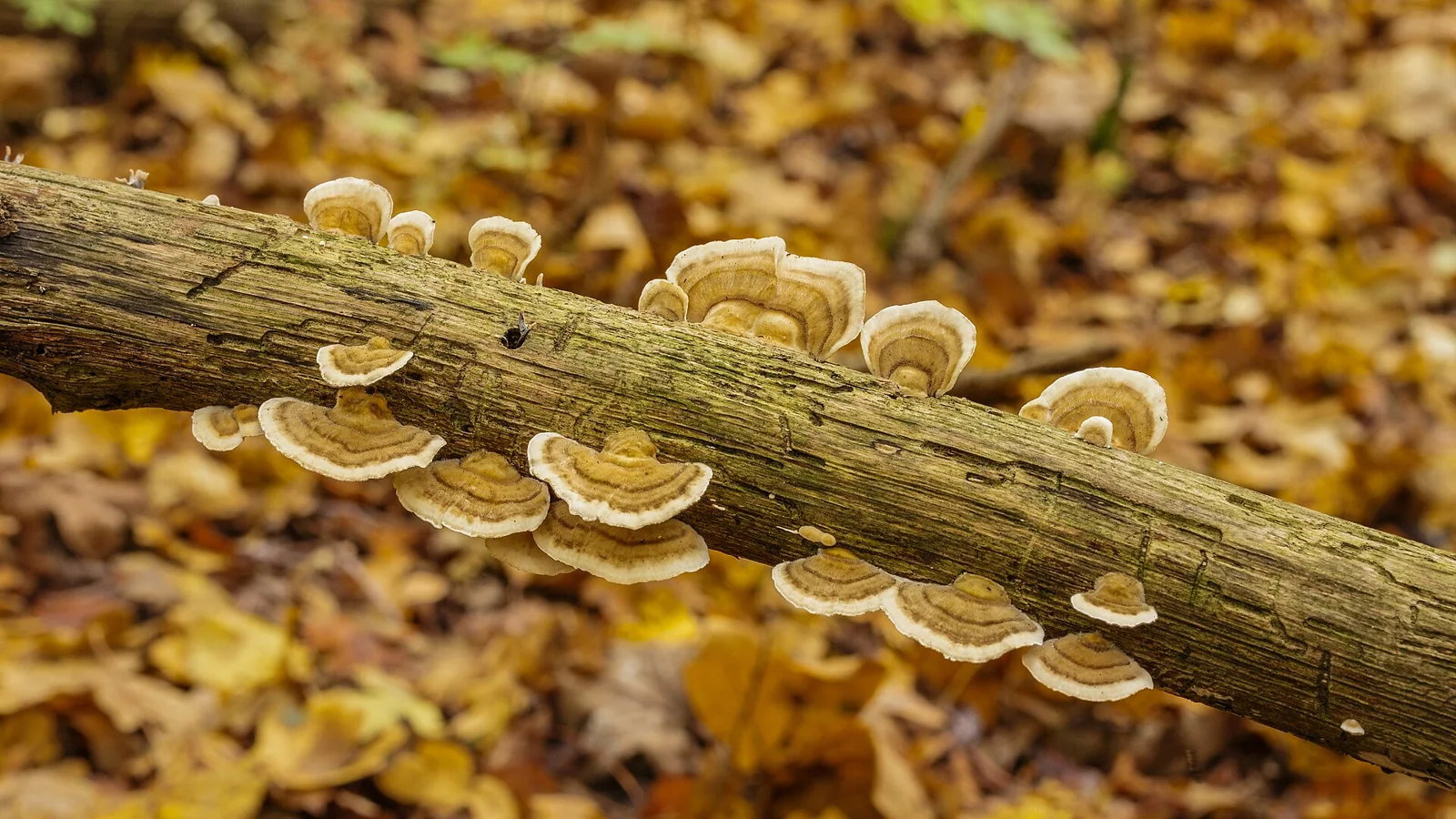
Turkey Tail (Trametes versicolor) is famous for its layered, rainbow‑like caps and for the polysaccharides that have attracted scientific interest. Like many organisms, fungi adjust their chemistry to the environment. Temperature, daylight length, and moisture all signal the fruiting body to allocate resources differently, which can change the levels of both health‑related polysaccharides and the vivid pigments that give the mushroom its name.
Polysaccharide production peaks in warm, moist months
Research comparing fruiting bodies collected across four seasons found that β‑glucan content—particularly the immunomodulatory β‑1,3/1,6‑glucans known as PSK and PSP—was highest in late summer (July–August) and early autumn (September) (Kim et al., 2021, J. Agric. Food Chem.). The authors measured soluble polysaccharide extracts using a phenol‑sulfuric acid assay and reported up to a 25 % increase in total glucan concentration in specimens harvested after a period of steady rainfall and temperatures between 20–25 °C. In contrast, winter collections (December–February) showed lower yields, likely because cooler, drier conditions limit metabolic activity.
Light exposure drives pigment intensity
Turkey Tail’s striking colors come from a mixture of melanin‑like pigments, quinone derivatives, and carotenoid‑like compounds. A 2023 study in Mycologia examined specimens grown under controlled light cycles and found that longer daylight periods (14–16 h) boosted the concentration of the orange‑red quinone pigment (cinnabarinic acid) by roughly 30 % compared to short‑day (8 h) conditions (Lopez‑Martinez et al., 2023). Field samples corroborated this pattern: mushrooms collected in midsummer displayed richer orange‑red bands, while early spring fruitings were paler, dominated by brown melanin shades.
Moisture and substrate quality matter too
Seasonal rainfall not only affects temperature but also the water content of the substrate. A 2022 investigation into cultivated Turkey Tail on hardwood sawdust reported that substrates with a moisture content of 65–70 % yielded fruiting bodies with 15 % higher polysaccharide extraction efficiency than drier substrates (Zhang & Huang, 2022, Food Chemistry). This suggests that growers aiming for maximal bioactive yield should time inoculation to coincide with the rainy season or artificially maintain higher humidity during fruiting.
Implications for commercial cultivation
For producers who harvest Turkey Tail for nutraceutical extracts, the data point to a clear seasonal strategy: schedule fruiting in late summer or early autumn, maintain high humidity, and provide ample light (or supplemental LED lighting that mimics long‑day conditions). Some commercial farms already use climate‑controlled rooms to replicate these parameters year‑round, but aligning harvest with the natural peak can reduce energy costs and improve extract potency.
Research gaps and future directions
While the existing studies highlight clear trends, they also expose gaps. Most work has focused on total polysaccharide content, leaving the specific ratio of β‑1,3 to β‑1,6 linkages under‑explored across seasons. Likewise, pigment analyses have largely been qualitative; quantitative chromatography could reveal how minor compounds shift with temperature fluctuations. Long‑term monitoring of wild populations would also help determine whether climate change is altering the seasonal windows that currently optimize bioactive production.
Connecting the findings to Mars‑bound mushroom farms
Understanding how light and moisture drive Turkey Tail chemistry on Earth gives a useful template for future off‑world cultivation. On a Martian greenhouse, growers could program artificial seasons—long light periods and controlled humidity—to mimic the summer peak that boosts polysaccharides and pigments, ensuring a potent, colorful harvest for research and potential food applications.
Sources
- Seasonal variation of β‑glucan content in Trametes versicolor
- Light‑dependent pigment synthesis in Turkey Tail mushrooms
- Effect of substrate moisture on polysaccharide yield in cultivated Turkey Tail
This article is for general information only and is not medical advice. Do not use it to diagnose or treat any condition; talk to a doctor about health questions.
This article was prepared with AI assistance from the sources listed above and approved by the Mushroom 2 Mars team before publication.